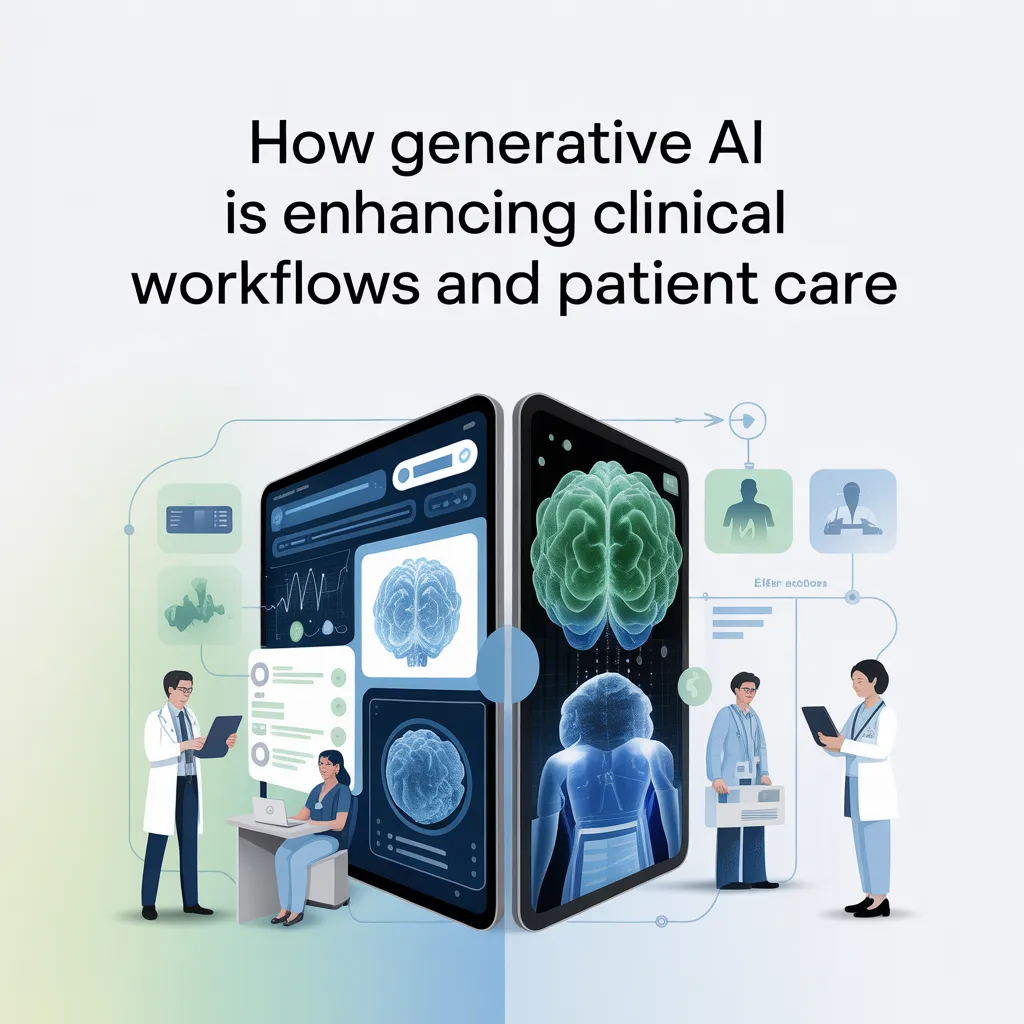
There is a strong transformative wave coming through the healthcare space, focused in large part on the application of generative AI. With the convergence of these innovations, the https://www.johnsnowlabs.com/generative-ai-healthcare/ platform brings transformative efficiency in the clinical workflows especially with the potential to dramatically enhance patient care. Generative AI are sophisticated algorithms that can generate text, insights, and tabulated medical data from massive data sets and are a powerful tool in today’s medicine.
In hospitals, where time is limited and accuracy is vital, generative AI serves as a brilliant assistant. It enables clinicians to better handle complex information, alleviates the burden of administrative work, and promotes informed decision-making.
Streamlining Clinical Documentation and Administrative Tasks
One of the biggest impact areas for generative AI in clinical workflows is that of automating documentation and administrative tasks. Healthcare workers report routinely devoting significant time to paperwork including clinical notes, discharge summaries and insurance documentation. In real time, generative AI can produce precise and organized medical records, which greatly lessens the workload.
Research indicates that documentation tools enabled with AI allow clinicians to spend less time on note-taking with their time consumption dropping from about 30 minutes to a couple of minutes per patient and more time on patient interaction and care delivery. In addition, rolling scheduling, billing, and coding automation also stack up to reduce margin of error and increase operational efficiency.
Enhancing Clinical Decision-Making with Intelligent Insights
Generative AI is essential in helping clinical decision-making processes by processing large amounts of patient data and medical knowledge. It can rapidly integrate data from electronic health records, research papers and diagnostic results to generate actionable intelligence.
This enables doctors to better control diagnosis and treatment plan. AI platforms can also serve as a “second opinion” by providing suggestions that are informed by analysis of all available data. This results in higher precision, fewer diagnostic mistakes and improved patient outcome.
In addition, generative AI improves the speed of diagnosis-even the treatment process, enabling clinicians to have more effective returns in critical moments. By bringing https://www.johnsnowlabs.com/generative-ai-healthcare/ into the clinical workflow, healthcare professionals can gain deeper insights and provide higher quality care.
Personalizing Patient Care and Engagement
Ditto for what makes impact: The % of Affordable and Personable patient experiences is uplifted. Every patient has a unique medical history, preferences, and needs, and generative AI has the potential to customize care plans based on these factors.
AI-based systems may also produce personalized treatment advice, patient educational content, and follow-up recommendations in different languages. This results in patients who better understand their condition and their treatment plan and were therefore more likely to adhere to it and achieve improved health outcomes.
Also, 24/7 assistance is available through AI-based chatbots and virtual assistants to answer questions from patients, book appointments, and help them navigate their healthcare journeys. These applications increase accessibility and cut down on wait times – all while making healthcare more patient-focused and streamlined .
Optimizing Clinical Workflows and Operational Efficiency
Generative AI is benefiting even the least efficient healthcare departments by streamlining workflows at every level. From employee shifts to equipment usage, AI-based solutions help manage the day-to-day operations of healthcare institutions.
Hospitals that have adopted generative AI have noted productivity gains for physicians, who spend less time on administrative duties. AI facilitates improved collaboration between health care providers by producing crisp, clean patient summaries that promote continuity of care.
In addition, generative AI can use patient data to predict outcomes and pinpoint high-risk patients who need to be treated first. That early penetration technique lets them get in front of problems, avoiding disease and boosting long-term health results.”
Accelerating Innovation in Research and Medical Training
Generative AI is transforming the landscape of medical research and training. It can quickly process massive amounts of clinical data, help summarize research findings and contribute to the formulation of new regimens of care. This speeds up innovation enabling faster discovery of life-saving therapeutics.
In contrast to linear trial documentation processes, generative AI can assist in identifying appropriate candidates for trials, generate trial documents, and automate workflows, ultimately leading to shorter time to market for new treatments. They say AI-based simulations can be used to train real doctors, actually making them better prepared.
Conclusion
Healthcare systems are being transformed through generative AI, with new heights of efficiency, accuracy and personalized care in clinical workflows and patient care. Whether automating documentation or enhancing decision-making to make treatment more personalized, its ramifications are deep and wide.